
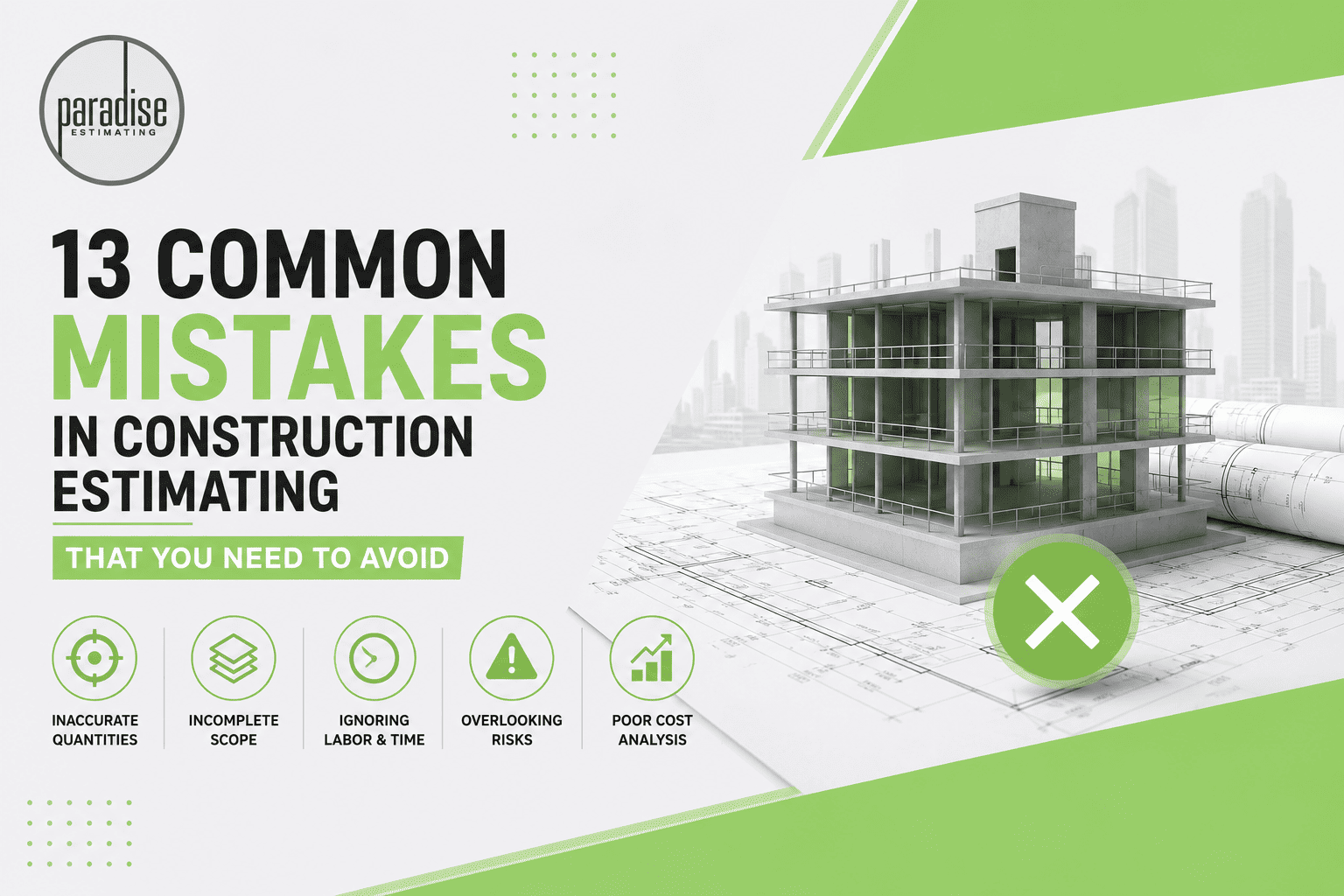
An accurate construction estimate is important to manage construction activities and produce accurate results. That's why a small mistake or mishandled numbers can change a profitable project into failure. If you want to win a construction project, one of the most important things you require is an accurate cost estimate or takeoff. Whether you are a general contractor, subcontractor, or builder, it depends on your estimate accuracy whether you win the bid or not. An accurate estimating report is required for converting your project into a profitable bid.
Why Accurate Construction Estimating Matters
Estimating a construction project is more than calculating its material and labor costs. It works as a base for successful project planning. It helps in budgeting, scheduling, and the bidding process. The U.S. Small Business Administration also provides guidance on managing business finances and controlling costs. Inaccurate cost estimates result in unexpected expenses and reduced profit margins. A proper estimate helps contractors in:
- Submitting competitive bids
- Controlling project costs
- Reducing financial risks
- Improving cash flow
- Planning labor and material purchases
- Increase project profitability
Common Mistakes Contractors Do
Many contractors make estimating mistakes, even experienced ones. They make wrong estimates by miscalculating the material and labor costs. They use outdated pricing data that can quickly turn a profit margin into a financial loss. These errors cause budget overruns and project delays. There are many common mistakes you can avoid to prevent your project from turning into a failure. Some are given below:
1. Not Clearly Defining the Project Scope
Before estimating any construction project, review the project drawings and specifications carefully. Check every single detail of contract documents keenly. Missing or misunderstanding the project scope often leads to incomplete estimates. It prevents you from unexpected costs and change orders during construction. A clear understanding of the project scope is important to prepare material takeoffs and cost estimates.
To Avoid It
- Review all details twice so nothing is overlooked
- Read specifications thoroughly
- Clarify unclear details before estimating
- Determine exclusions & assumptions
2. Do Not Check Material Availability
Estimating the right amount of materials is not only part of the process; it is essential. Contractors should consider whether those materials are readily available or not. Otherwise, contractors have to face the issues. It causes supply chain disruptions. Long lead times can affect both project schedules and budgets. That's why contractors should ensure the availability of materials before starting the construction project.
How to Avoid It
- Utilize digital takeoff software
- Recheck the measurements
- Verify calculations before submitting the estimate
3. Use Outdated Cost Data
Material prices and labor rates fluctuate regularly. It is more often due to inflation, market demand, and supply chain conditions. Contractors who use outdated cost information may lead to underbidding. That practice reduces your profit margins. That's why it is important to work with updated supplier quotes. Use current pricing databases. Keeping material prices up-to-date improves the accuracy of the estimate. Always check current pricing before calculating the cost and making a budget for your project.
4. Hire Unskilled Estimators
Contractors must understand that even the best estimating software cannot replace experience. Professional estimators understand construction drawings and specifications more specifically than robotic software does. Estimators who have local building practices and are aware of pricing trends make more profitable bids. Choose to work with experienced estimators to produce reliable estimates and minimize costly mistakes.
How to Avoid It
- Hire estimators from a reliable outsourcing company
- Verify their portfolio and experience
- Implement skill-based processes
- Ensure they are proficient for you
5. Do Not Use Modern Estimating Software and Tools
Using advanced estimating tools is not a need anymore; it's essential for estimating construction projects. Working with outdated software or manual calculations increases errors. It slows down the estimating process and reduces accuracy. Using advanced estimating software provides updated cost data. It provides digital takeoff for labor, material, and equipment. It automates cost calculations that improve productivity. Manually calculated costs significantly impact the profitability of the project.
How to Avoid It
- Always look for data-driven tools
- Tools that do not offer 100% accuracy in results
- Programs who do not update their pricing regularly
- Systems that prepare estimates using historical data
6. Consider the Project Location
The location of every construction project is different, and it has a direct impact on costs. It affects labor rates, material prices, and expenses of transportation. Even taxes and permit requirements change with changes in areas. Local building codes vary from one place to another. Ignoring these factors can result in inaccurate estimates. That's why whenever you sit down to make an estimate or calculate the cost of your construction project, use location-specific pricing data to get a precise estimating report.
7. Stay Updated with Industry Trends
The construction industry changes constantly. New materials and different installation methods have a strong effect on project cost. Labor regulations and pricing trends can all influence the budget of the project. Estimators who stay informed are better prepared. Create realistic and competitive estimates to produce profitable results.
8. Not Understanding Client's Requirements
Every client has its own unique expectations regarding budget. It may vary in materials, quality standards, and project timelines. Contractors or estimators should take these requirements into account. This helps prepare estimates that align with the client's goals. It reduces the risk of disputes later and saves your time.
9. Perform Risk Assessment
During the construction project, there are sudden changes that happen. Such as design changes, weather delays, labor shortages, and material price increases. Identifying these risks early during the estimating stage is important. Contractors who don't pay much attention to them face unexpected financial losses. However, by considering these, they can reduce risk and manage the project properly.
How to Avoid It
- Evaluate project risks during the estimating stage
- Include reasonable contingency allowances
10. Review Every Detail Carefully
Small errors in measurements and calculations can have a strong impact on the project. That's why it is important to understand the project scope and specifications carefully. Review drawings and the material takeoff report properly. Check all pricing details before submitting the bid to eliminate costly mistakes.
To avoid it
- Use professional estimating software
- Perform digital quantity takeoffs
- Calculate costs using advanced tools
- Check every single detail three times to reduce errors
11. Do Not Conduct a Final Quality Check
Verify all calculations and quantities before submitting the bid. Check that labor costs, equipment expenses, overhead, and profit margins are accurate. Perform a thorough review to ensure the estimate is complete and ready for submission.
12. Not Meeting Bidding Deadlines
Your estimate loses its worth after missing the bidding deadline. Effective management of time and a structured estimating process is important for submission. Early preparation helps contractors submit professional bids on time.
13. Trying to Handle Every Estimate In-House
Contractors can't calculate the cost with a lot of work. For contractors who work on more than one project, calculating the cost becomes a challenge for them for multiple plans. They have to deal with tight bidding deadlines and heavy workloads that often lead to mistakes. Contractors miss their bidding opportunities with mishandling the numbers.
Ways to avoid it
Many contractors like to hire experienced professionals to do their construction estimating. Outsourcing provides access to skilled estimators. Contractors get results from advanced estimating software. Get accurate cost data without the expense of hiring a full-time estimating team. It also allows contractors to focus on projects. With the right estimating company like Paradise Estimating, you can improve your bidding ratio.
Tips for Outsourcing Your Estimate
Choose to work with an estimating team that earns the trust of contractors. Deliver accurate results without compromising the quality. Get estimates from a trustworthy estimating partner like Paradise Estimating and enjoy smooth project execution. Here is what you should check before working with them:
- Industry experience
- Trade-specific expertise
- Accurate quantity takeoffs
- Fast turnaround times
- Transparent pricing
- Positive client reviews
- Use of professional estimating software
- 24/7 customer support
Conclusion
Construction estimating is one of the most important steps in any building project. A properly estimated cost helps contractors in submitting competitive bids. It helps them control costs and complete projects profitably. On the other hand, common mistakes such as inaccurate quantity takeoffs and outdated pricing also affect the accuracy of the bids. Even missed overhead costs and rushed calculations can quickly lead to financial losses.
You can learn from these mistakes by following best practices that have been proven to work. Contractors can improve estimate accuracy, reduce risks, and make better business decisions. Whether you prepare estimates in-house or partner with professional construction estimating services, investing time in accurate estimating is an investment in the long-term success of your construction business.
Frequently Asked Questions
Can construction estimating mistakes delay a project?
Yes, inaccurate estimates lead to material shortages and budget overruns. It causes scheduling issues and unexpected project delays. Review your estimate before bidding and start working on it. It is important to minimize these risks and keep your project on track.
Should I outsource my construction estimating instead of doing it in-house?
You should choose to outsource your estimate to a reliable estimating source if your team is handling multiple projects or lacks experienced estimators. Outsourcing is a cost-effective solution for you. Professional estimating firms provide accurate estimates and faster turnaround times. It reduces costly errors and prevents you from underbidding issues.
What is the most common estimating mistake contractors make?
The most common mistake is not clearly defining the project scope, which leads to incomplete estimates, unexpected costs, and change orders during construction.
How often should I update my cost data?
You should update your cost data regularly—ideally before every estimate. Material prices and labor rates fluctuate due to inflation, market demand, and supply chain conditions, so using current pricing is essential for accuracy.
Why is risk assessment important in construction estimating?
Risk assessment helps identify potential issues like design changes, weather delays, labor shortages, and material price increases early. Including contingency allowances protects your budget from unexpected financial losses.
Related Articles
What Is Construction Estimating and How Does It Work?
August 28, 2026
Best Construction Estimating Software: Estimators & Contractors Need to Know
August 27, 2026
Construction Cost Estimating & Takeoff Services—Every Detail You Want to Know
August 24, 2026
What Are Construction Estimating Services and Why Should You Outsource Them?
August 21, 2026
What is Construction Cost Estimating? Process, Methods & Tools
August 20, 2026
Detailed Guide to Cost Estimating for NYC Contractors
August 19, 2026
Best Tips to Build a Perfect Construction Budget
August 17, 2026
How to Build a Construction Budget That Actually Works?
August 11, 2026

The Importance of an Accurate Estimate for Winning More Bids
August 7, 2026
What to Do When Your Estimator Misses the Bid Deadlines (How to Prevent It)
August 3, 2026
5 Ways Accurate Estimates Can Save Your Construction Project
January 15, 2024

Understanding Material Take-Offs: A Complete Guide
January 10, 2024
How Technology is Revolutionizing Construction Estimating
January 5, 2024