
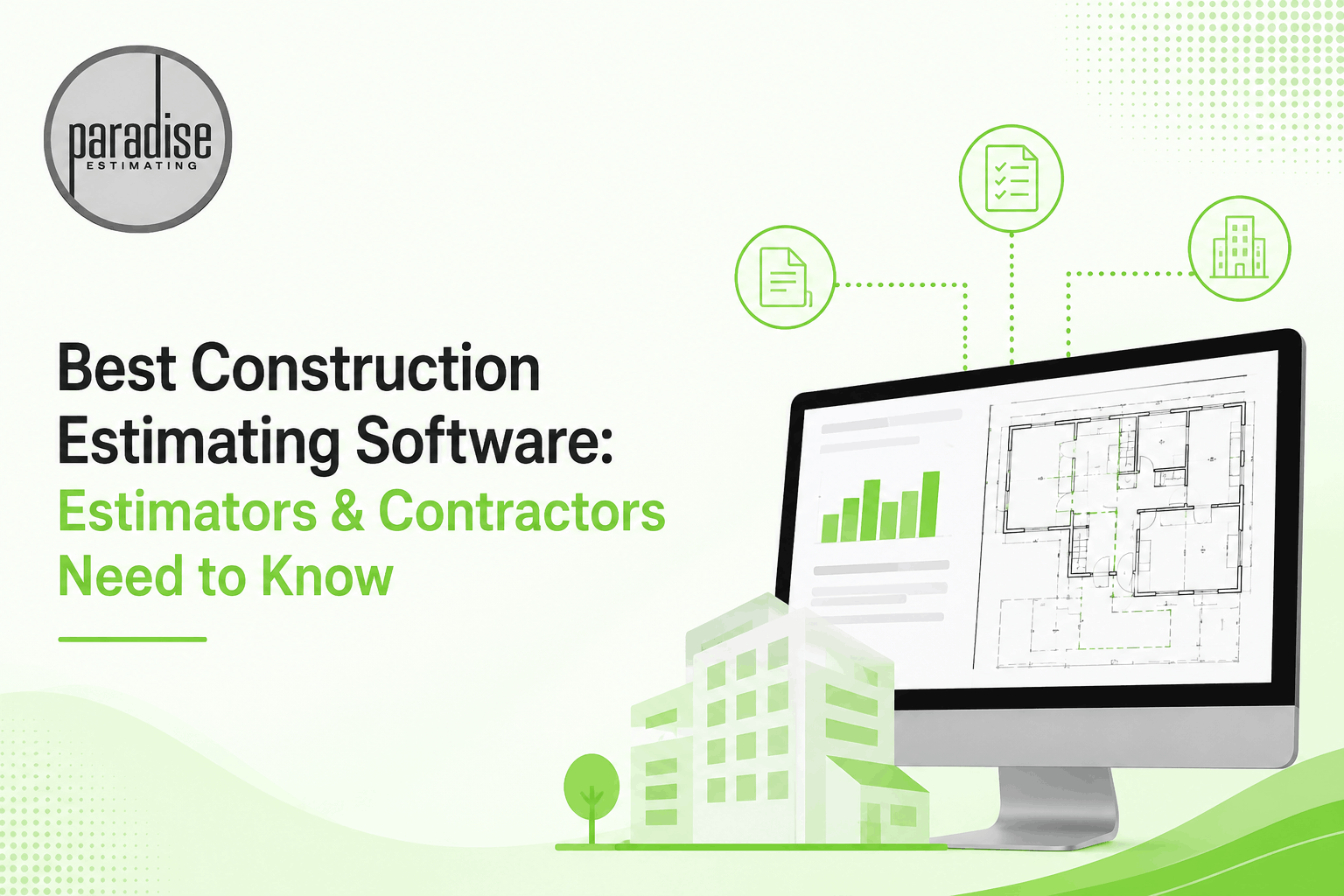
The construction industry has changed significantly in the past few years. Projects have become more complex and deadlines are shorter. Clients require faster and more accurate bids. The accuracy of cost estimates and takeoff reports is a basic need for contractors to bid on more projects. Estimates that were inaccurate got rejected before going to the client's desk. The reason for that is inaccurate estimates. Construction activities need accurate cost estimates and material takeoffs. For that, contractors and estimators must use estimating software to get reliable results.
Why Software Is a Basic Need for Construction Projects
Preparing estimates manually takes more time because of spreadsheets or paper drawings. Manual cost calculation increases the probability of miscalculations. Estimating software is what contractors use today to address these problems. Tools automate quantity take-off and organize data in the proper format without making any mistakes. Generate detailed cost estimates that are accurate and up-to-date.
If you are an estimator or contractor working on construction projects, these tools allow you to produce accurate estimates in less time. You are able to make more bids without sacrificing quality. Tools produce precise numbers and help contractors produce competitive bids.
Benefits of Using Software for Construction Estimations
Professional estimating tools have several advantages over traditional estimating methods.
It Enhances Cost Accuracy
Manual calculations are prone to errors and influence the final project budget. It automatically measures digital drawings. Calculates more accurately. This reduces errors and makes all estimates more dependable.
It prepares a more competitive bid
In competitive bidding, time is critical. It significantly reduces the time required to measure quantities, calculate costs, and prepare reports. Contractors can respond quickly to bid invitations and increase the number of projects they bid on during the year.
It helps in better management of costs
This technology provides a detailed breakdown of material, labor, equipment, and overhead costs. This gives contractors better visibility into project expenses and helps them make informed financial decisions before construction begins.
It provides detailed quantity takeoffs
Most modern estimating programs allow users to perform takeoffs directly from PDF drawings or digital plans. Instead of measuring plans manually, estimators can quickly calculate areas, lengths, counts, and volumes with digital tools, improving both speed and accuracy.
It Updates Estimates Easily
Construction drawings often change during the bidding stage. Cost calculators make it easier to update quantities and costs whenever revised plans are issued, eliminating the need to recreate estimates from scratch.
Features to Look for in Construction Estimating Tools
Not every estimating solution offers the same capabilities. Before investing in software, contractors should evaluate the features that best match their project requirements. Choosing software with these features can improve productivity and help create more professional, bid-ready estimates. Some of the most important features include:
- Digital quantity takeoff tools
- Material and labor cost databases
- Integration with Excel and project management software
- Customizable estimating templates
- Automatic calculation of totals and markups
- Reporting and bid summary generation
- Cloud storage and team collaboration
- Support for multiple construction trades
Who Should Use Construction Estimating Technology?
Construction estimating tools are useful for professionals across the construction industry. It helps improve estimating accuracy regardless of project size or complexity. By using reliable estimating software, these professionals can streamline their workflow, reduce manual effort, and produce accurate estimates that support better decision-making throughout the construction process. It is commonly used by:
- General contractors
- Subcontractors
- Construction estimators
- Project managers
- Developers
- Quantity surveyors
- Architects and engineering firms
Popular Construction Estimating Software Options
The construction market offers different estimating software solutions designed for contractors, subcontractors, and professional estimators. Each tool provides unique features depending on project size, trade requirements, and workflow needs. Some software focuses mainly on quantity takeoffs, while others provide complete estimating, bidding, scheduling, and project management capabilities.
PlanSwift
PlanSwift is widely used for digital quantity takeoffs and cost estimation. It allows estimators to measure areas, lengths, and quantities directly from PDF drawings. The software is popular among contractors because it supports multiple trades, including concrete, drywall, roofing, electrical, and mechanical estimating.
Bluebeam Revu
Bluebeam Revu is a PDF-based construction software that helps estimators review drawings, perform measurements, add markups, and organize project documents. Many contractors use it alongside estimating spreadsheets or other estimating platforms for faster quantity calculations.
Procore Estimating Tools
Procore provides construction management solutions that connect estimating with other project activities. Its tools help contractors manage bids, communicate with teams, and maintain project information in one centralized platform.
STACK Takeoff and Estimating
STACK is a cloud-based platform designed for digital takeoffs and estimating. It allows contractors to collaborate with team members, access project files online, and create estimates from anywhere.
Sage Estimating
Sage Estimating is commonly used by larger contractors and construction companies that require detailed cost databases, customized reports, and integration with accounting systems.
How Estimating Software Helps Different Construction Trades
Construction estimating software is not limited to general contractors. Different trades use these tools to prepare detailed estimates based on their specific requirements.
For example, electrical contractors use estimating software to calculate wiring, fixtures, panels, and equipment costs. Plumbing contractors use it to measure pipes, fittings, and installation requirements. Roofing contractors can estimate materials such as shingles, underlayment, and flashing more efficiently.
Similarly, concrete, drywall, HVAC, masonry, and framing contractors use digital estimating tools to improve quantity calculations and prepare competitive bids. These software solutions reduce the time spent on manual measurements and help specialists focus on project planning and execution.
Choosing the Right Construction Estimating Software
Selecting the right estimating software depends on several factors, including project type, company size, budget, and required features. Small contractors may prefer simple and affordable solutions that focus on takeoffs and basic estimates, while larger construction companies may need advanced platforms with cost databases, integrations, and team collaboration features.
Before selecting software, contractors should consider:
- Does the software support their specific construction trade?
- Can it import and measure digital drawings?
- Does it provide updated cost databases?
- Can multiple team members access project information?
- Does it integrate with existing accounting or project management systems?
- Is customer support available when technical issues occur?
A suitable estimating platform should improve workflow rather than create additional complexity. Contractors should choose software that matches their daily estimating needs and helps them prepare faster, more reliable bids.
Limitations of Construction Estimating Software
Although estimating software provides many benefits, it does not completely replace professional estimating knowledge. Software can calculate quantities and organize costs, but it still requires an experienced estimator to review drawings, understand project requirements, and identify missing scope details.
Incorrect drawings, outdated pricing information, or improper software usage can still lead to inaccurate estimates. Contractors should combine technology with professional expertise to achieve the best results.
The Future of Construction Estimating Software
Technology continues to change the way construction estimates are prepared. Modern estimating platforms are becoming more advanced with cloud collaboration, artificial intelligence, automation, and improved cost databases.
Future estimating tools are expected to provide faster calculations, better project predictions, and stronger connections between estimating, scheduling, and construction management systems. These improvements will help contractors reduce risks, control costs, and compete more effectively in the construction market.
Conclusion
Construction estimating software has become an important tool for contractors and estimators who want to prepare accurate bids, reduce calculation errors, and save valuable time. Digital takeoffs, automated calculations, cost databases, and reporting features make the estimating process faster and more reliable compared to traditional methods.
However, software works best when combined with professional construction knowledge. Estimators still need experience to review plans, understand project requirements, and make informed decisions. By choosing the right estimating software and using it effectively, contractors can improve bid accuracy, manage project costs, and increase their chances of winning profitable projects. Paradise Estimating helps contractors combine advanced estimating tools with professional expertise to prepare accurate and reliable construction estimates.
Frequently Asked Questions
What is the best construction estimating software for small contractors?
For small contractors, PlanSwift and STACK are popular choices due to their user-friendly interfaces, affordable pricing, and strong digital takeoff capabilities. Bluebeam Revu is also widely used for PDF-based measurements and markups.
Can estimating software replace professional estimators?
No, estimating software cannot replace professional estimators. While software automates calculations and organizes data, experienced estimators are still needed to review drawings, understand project scope, identify risks, and make informed decisions.
Is cloud-based estimating software better than desktop versions?
Cloud-based software offers advantages like remote access, real-time collaboration, and automatic updates. Desktop versions may be preferred by contractors who work offline or have specific security requirements. The choice depends on your workflow and team structure.
How much does construction estimating software cost?
Pricing varies widely. Basic takeoff tools can cost around $50-100 per month, while comprehensive estimating platforms may range from $200 to $500+ per month. Enterprise solutions with advanced features and integrations can cost significantly more.
Do I need different software for different construction trades?
Some software like PlanSwift supports multiple trades, including electrical, plumbing, HVAC, concrete, and drywall. However, specialized tools like FastPIPE and FastDUCT are designed specifically for MEP estimating and may offer more detailed features for those trades.
Related Articles
What Is Construction Estimating and How Does It Work?
August 28, 2026
13 Common Mistakes in Construction Estimating That You Need to Avoid
August 25, 2026
Construction Cost Estimating & Takeoff Services—Every Detail You Want to Know
August 24, 2026
What Are Construction Estimating Services and Why Should You Outsource Them?
August 21, 2026
What is Construction Cost Estimating? Process, Methods & Tools
August 20, 2026
Detailed Guide to Cost Estimating for NYC Contractors
August 19, 2026
Best Tips to Build a Perfect Construction Budget
August 17, 2026
How to Build a Construction Budget That Actually Works?
August 11, 2026

The Importance of an Accurate Estimate for Winning More Bids
August 7, 2026
What to Do When Your Estimator Misses the Bid Deadlines (How to Prevent It)
August 3, 2026
5 Ways Accurate Estimates Can Save Your Construction Project
January 15, 2024

Understanding Material Take-Offs: A Complete Guide
January 10, 2024
How Technology is Revolutionizing Construction Estimating
January 5, 2024