
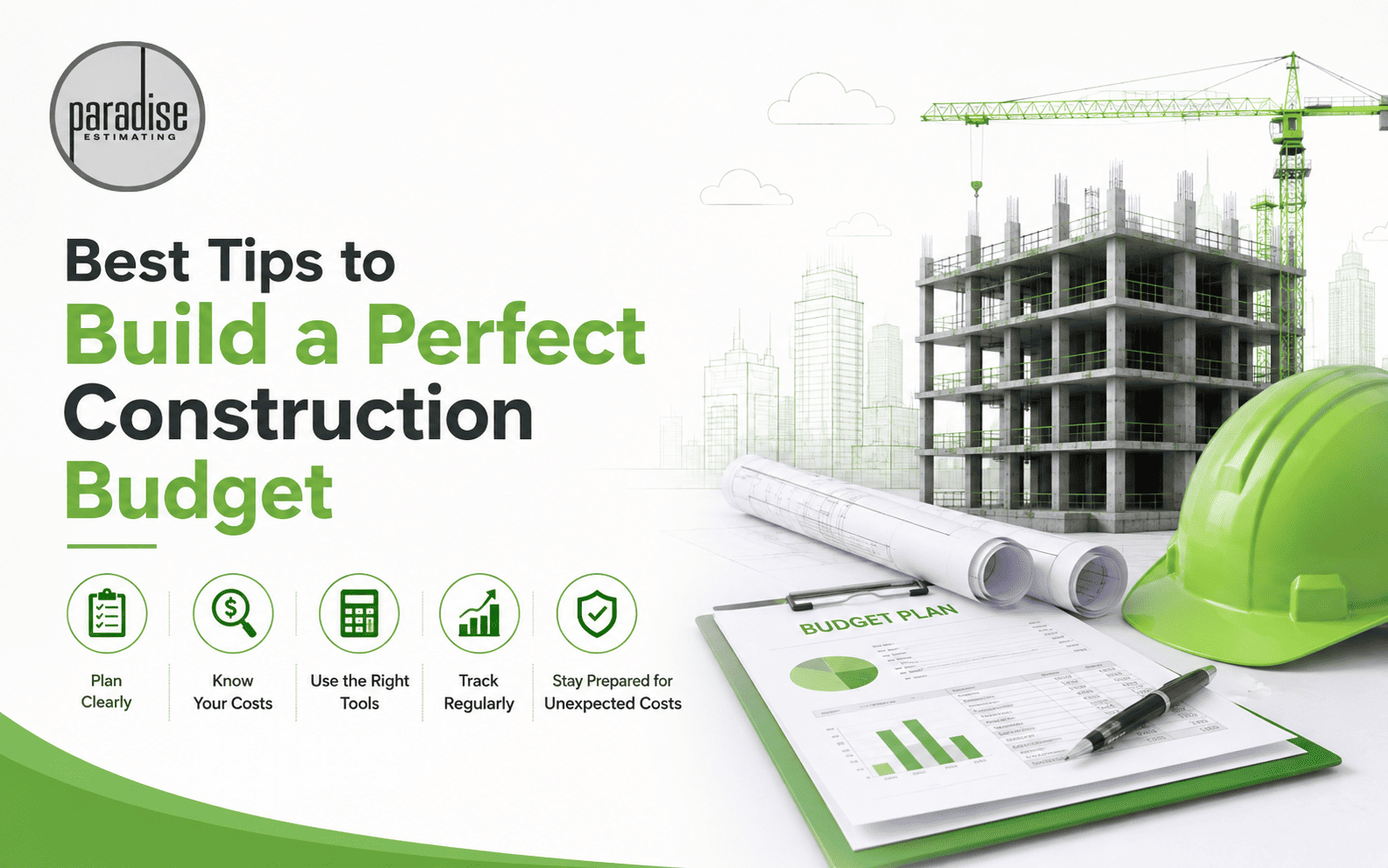
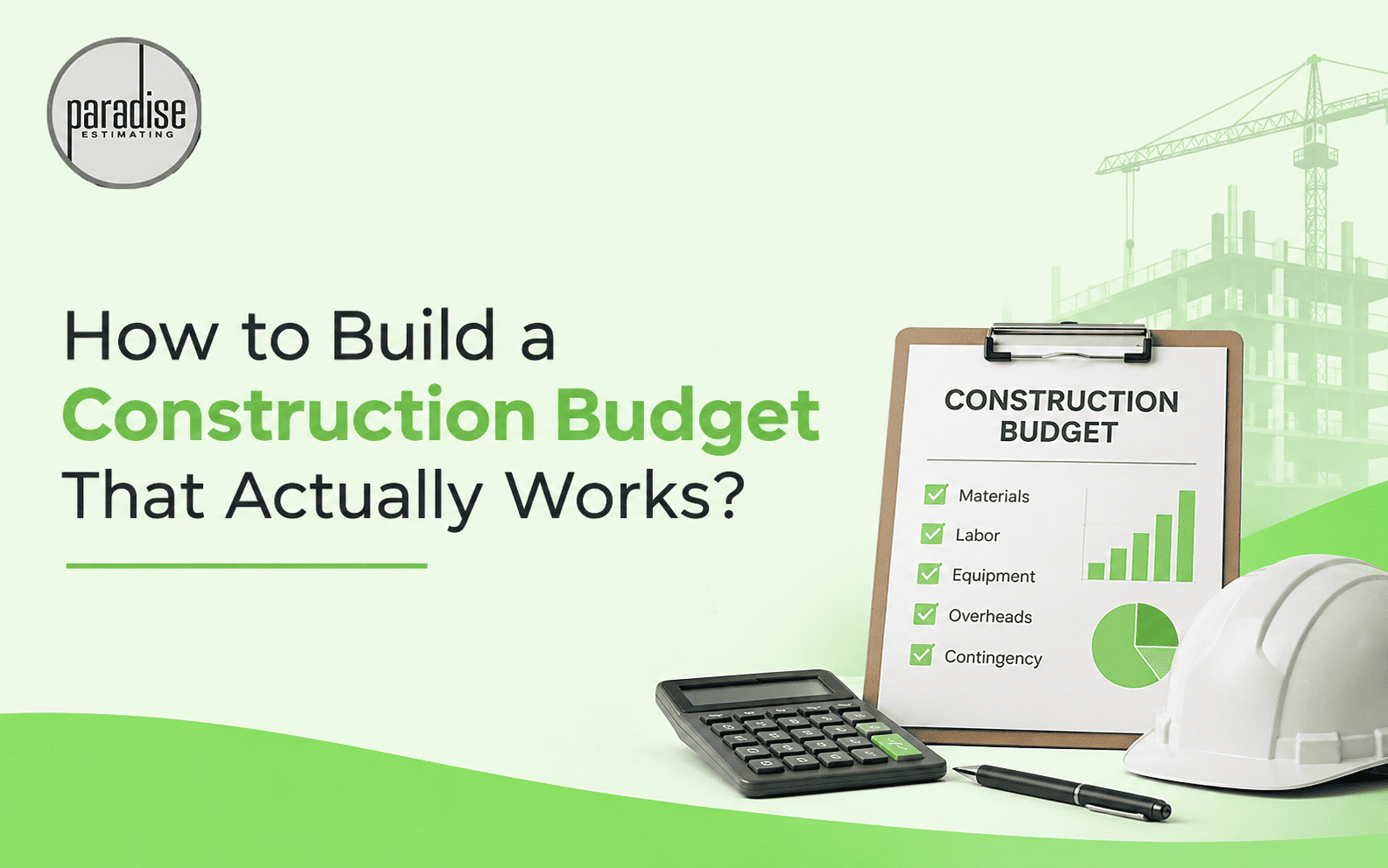
A perfect budget is the foundation of project success. Building a construction budget requires proper planning and accurate estimation. It is important to ensure your project's profitability and avoid cost overruns.
Planning a construction budget involves multiple steps. Whether you are building a commercial project or starting a new home project, you can avoid costly mistakes, minimize delays, and reduce the risk factor with a proper budget.
What Is a Perfect Construction Budget?
A perfect budget is a comprehensive and detailed financial road map. It is the estimated cost of projects that is required to execute the work. To prepare a perfect budget, you must understand the scope, cost types, and use of advanced technology to minimize the risk factor in your plans. A proper understanding of goals and objectives brings clarity for you. It provides a precise and flexible structure to manage the cash flow and avoid unexpected expenses from start to finish.
Why Is It Important to Work with Exact Numbers?
It is important to bring financial stability that aligns the income with the expenses. You can reduce financial stress and make decisions accurately. It saves time and brings clarity to your work. Accurate budgeting is important to achieve long-term goals and prevent unwanted, costly surprises.
Tips to Build a Perfect Budget
Preparing a budget accurately without cutting corners in quality is a major concern of many clients in the USA. In the construction industry, where prices are unstable, it is essential to work with exact numbers.
Here are the tips you should follow to prepare an accurate budget:
- Define Project Scope & Its Objectives
- Break down the budget into parts
- Define hard cost & Soft cost
- Build a team of expert estimators
- Use historical data and market rates
- Use value engineering to its full advantage
- Use advanced technology for tracking
- Proactively manage changes
- Always have some space for contingencies
- Account for profit margins & overhead
Understanding Scope & Objectives
The first and most important step is understanding the goals in planning any construction project budget. Without a proper understanding, you can't keep your budget on track. It is nearly impossible to achieve your desired goal without scope clarification.
Follow a few steps to understand the scope:
- Describe the project purpose, whether it is a new building, a renovation, or a repair task
- Check the budget consideration, that is, how much your client is willing to spend on the plan
- Establish a realistic project timeline and have a clear timeframe
- Check the quality expectation for the material to deliver results that meet the standards
- Make sure you are aware of all building codes to avoid later legal disputes
Breaking Down the Budget into Parts
Break down the project into smaller, manageable parts to make sure no item is overlooked. Make a clear outline to avoid scope creep later. Small and sudden changes in planes ruin the profit margins. A detailed cost breakdown helps you understand where your money is going and see the areas where you can save money.
Know the Difference Between Hard & Soft Costs
Knowing the difference between hard and soft costs is essential to building a budget that perfectly matches your construction conditions. Direct costs are indirectly related to your budget, like labor, material, and equipment rentals. Indirect costs are mostly the overlooked costs of the project, like permits, insurance, taxes, and legal fees.
Assemble a Team of Experts & Professionals
Any successful construction budget requires a skilled team that brings multiple areas of expertise to the table. Team up experts for building an accurate budget estimate. Choosing the right team is important for a smooth construction process. Always choose a team that has a proven record.
Expert in Management
The manager of the project checks the day-to-day tasks to make sure the project is completed on time and within the budget. It's his responsibility to manage communication between contractors, subcontractors, and suppliers.
General Contractor
Select a general contractor to coordinate construction conditions, communicate with subcontractors, and oversee the construction site. The main responsibility of a general contractor is to ensure the task is completed on time.
Designer or Architect
If you want to start a new building project or work on renovating the old one, hire an architect or designer to prepare blueprints or a design for your project.
Engineers
Hire engineers according to your work scope and complexity. Work with electrical or mechanical engineers to design a system that is integrated with your plans.
Use Historical Data & Market Pricing
Always check the previous data before preparing an estimate. Material prices change rapidly, so use current data to get a quote from multiple subcontractors or suppliers. Gather at least three bids from subcontractors to get competitive pricing.
Use Value Engineering
Value engineering is a process of improving your project functionality and reducing the cost. Like other cost-cutting methods, value engineering does not lower the quality. It provides cost-effective alternatives that save 20% of your total construction cost.
Use Advanced Technology for Tracking
Use advanced technology to track your construction budget progress instead of using simple spreadsheets. Tools like Procore, Buildxact, or QuickBooks Online are used to integrate the cost, change orders, and time-to-time updates. Real-time updates of estimated cost are very helpful to prevent cost issues early. Use multiple tools for quantity takeoff, blueprint analysis, and reducing errors.
Proactively Manage Changes
Never perform extra work without a written, signed document that has a direct impact on cost, schedule, and timing. If any line item goes beyond the budget, identify the issues first, then reallocate the resources to keep the project in budget.
Space for Contingency Costs
No matter how experienced or professional the staff you hire, unforeseen conditions and unexpected challenges can arise at any time. Whether it is soil conditions or changing material prices, an owner must have an idea of contingency funds.
Account for Profit Margins & Overhead
Don't forget the expenses like office rents, administrative staff, and utility costs. Add the profit margin percentage according to your desire.
Common Budgeting Challenges You Can Face
Many factors affect your project budget. We discuss the most common challenges anyone can face during budgeting. The most common ones are irregular expenses, unrealistic goals, and complex projects. People who don't update their plans or underestimate the cost often fail. Here are some other challenges:
- Ignore unexpected expenses
- Overcomplicating the tracking system
- Set unrealistic expectations
- Assuming monthly expenses do not fluctuate
- Lack of regular Reviews
- Underestimating the expenses
Is Outsourcing the Only Solution for Budgeting the Best?
Construction experts who don't have the expertise and time to prepare a budget always prefer to outsource their project to get a perfect budget that is aligned with their work. By outsourcing their work, they get an exact estimation of cost, timeline, and resources.
Outsource your estimate and remove the guesswork from your project plans. It brings financial stability to your work and improves ROI.
Choose a reliable and trustworthy estimating firm like Paradise Estimating for outsourcing your estimate. Get leverage from working with experts and get access to expensive estimating tools that you might not have in-house. To enjoy smooth construction, get an accurate budget by outsourcing your estimate.
Final Thoughts
A perfect budget is more than just calculating numbers. It is about creating a roadmap to build a road between ambition and reality. In the construction industry, where fluctuation in material prices is a fact of life, accuracy is the best defense. Outsourcing is the best solution for those who don't have the expertise and time to create an accurate budget. To get the leverage of assistance from experts and access to highly accurate tools, work with a reliable estimating company like Paradise Estimating in the USA.
Frequently Asked Questions
What is the difference between hard costs and soft costs in construction?
Hard costs are direct construction costs like labor, materials, and equipment. Soft costs are indirect expenses such as permits, insurance, taxes, legal fees, and design services.
How much contingency should I include in my construction budget?
Industry standards recommend adding 5-10% of the total project cost as contingency. For complex projects or in volatile markets, 15-20% may be more appropriate to cover unforeseen conditions.
What is value engineering in construction budgeting?
Value engineering is a systematic method to improve project functionality while reducing costs. It identifies cost-effective alternatives without compromising quality, potentially saving up to 20% of total construction costs.
How often should I review my construction budget?
You should review your budget regularly—at least monthly or after major project milestones. Regular tracking helps identify cost overruns early and allows for timely adjustments.
Why should I outsource my construction budget estimate?
Outsourcing gives you access to experienced estimators, advanced software, and faster turnaround times without the overhead costs of hiring full-time staff. It reduces risk, improves accuracy, and allows you to focus on core business operations.
Related Articles
What Is Construction Estimating and How Does It Work?
August 28, 2026
Best Construction Estimating Software: Estimators & Contractors Need to Know
August 27, 2026
13 Common Mistakes in Construction Estimating That You Need to Avoid
August 25, 2026
Construction Cost Estimating & Takeoff Services—Every Detail You Want to Know
August 24, 2026
Detailed Guide to Cost Estimating for NYC Contractors
August 19, 2026
How to Build a Construction Budget That Actually Works?
August 11, 2026
The Importance of an Accurate Estimate for Winning More Bids
August 7, 2026
What to Do When Your Estimator Misses the Bid Deadlines (How to Prevent It)
August 3, 2026
5 Ways Accurate Estimates Can Save Your Construction Project
January 15, 2024