
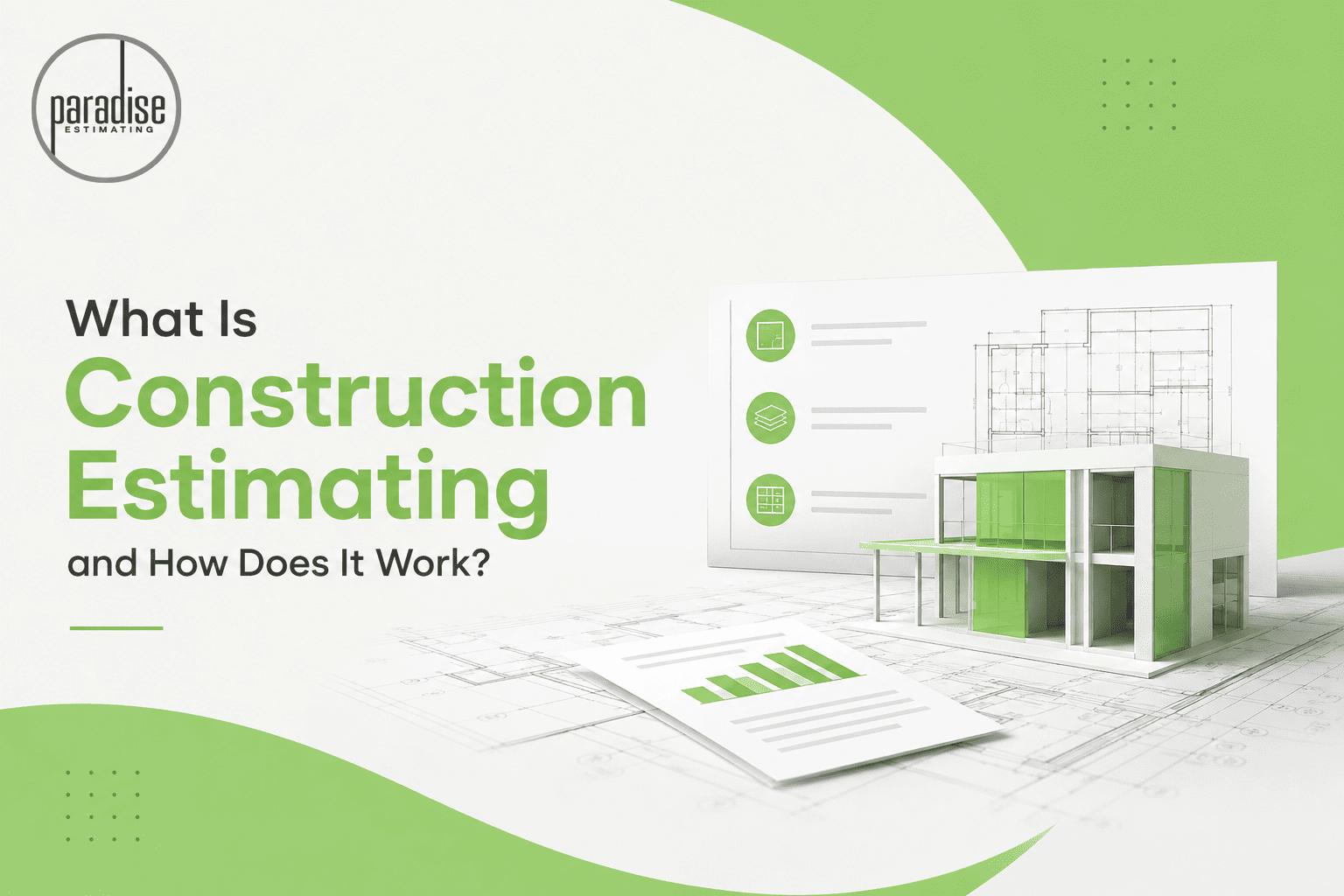
Before the start of any construction project, the most important thing that every contractor and builder needs to know is, "How much will this construction project actually cost?"
Construction estimating is one of the most important phases of any construction project. It involves the calculation of the total expected cost required to complete the project. It includes everything from site preparation, materials and labor costs, equipment, subcontractor work, and final finishes. An accurate estimate allows project stakeholders to make informed decisions. So they can prepare realistic budgets and identify potential cost risks before construction begins.
Accurate estimating is especially important for contractors when they are preparing bids. Construction estimating services deliver precise material, labor, and cost estimates and more information to use when bidding to lock in your profit margins. A good estimate will provide a realistic financial overview of the work that needs to be completed, whether this is in a home, business, or large-scale construction.
What Are Construction Estimating Services?
Construction estimating services involve the calculation of the total cost of the construction project before it starts. They provide a detailed breakdown of material quantities, labor hours and costs, equipment, subcontractor expenses, and other project-related costs. It also includes all necessary information needed to determine the overall budget and bid price.
A detailed construction estimate gives the contractor a clear picture of total expense. It enables them to plan their resources, minimize financial risks, prepare competitive bids, and avoid overestimating and underestimating. Project owners also use estimates to determine the scope and feasibility of the project.
Accurate estimating helps contractors protect their profit margins by knowing what they are likely to spend on the project. It also helps clients understand what to expect to spend on the project by identifying expected costs early.
What Is Included in a Construction Estimate?
A cost estimate includes all major costs necessary to complete the project. Moreover, the exact details depend upon the project's size, type, location, drawings, specifications, and scope of work. Here are some of the important elements of a construction estimate:
Material Costs
Material costs are one of the most important components of a construction estimate. Estimators review drawings and specifications for a project and decide how much and what kind of material is needed.
These can include:
- Concrete and cement
- Steel and structural materials
- Lumber
- Drywall and insulation
- Roofing materials
- Doors and windows
- Flooring and finishes
- Plumbing fixtures
- Electrical components
Labor Costs
Labor costs include how much manpower is required for each component of the project. The estimate could include workers, hours, wages, and productivity needed.
The various types of workers that may be needed on a project include carpenters, electricians, plumbers, equipment operators, painters, and general laborers. Accurate labor estimating is important because if the estimates are too low, the contractor's profit can be quickly reduced.
When determining labor costs, estimators can also review current construction wage information from the U.S. Bureau of Labor Statistics to better understand wage trends and rates for construction occupations.
Equipment Costs
Special machinery and equipment are often needed for construction projects. The cost of excavators, cranes, loaders, lifts, concrete equipment, trucks, and smaller equipment may be included in the estimate, depending on the project.
Equipment costs may include the following:
- Rental charges
- Fuel
- Delivery and transportation
- Operator costs
- Maintenance
- Equipment usage
Subcontractor Costs
Many contractors hire subcontractors to perform specific jobs in the construction process. It must also be included in the construction estimate. It allows estimators to deliver accurate estimates and reduce on-site cost overruns.
Common works that are outsourced by contractors:
- Electrical
- Plumbing
- HVAC
- Roofing
- Masonry
- Fire protection
- Landscaping
- Specialized finishes
Estimators calculate by comparing subcontractor quotes, market information, or previous estimates.
Quantity Takeoffs
Quantity takeoff is an important part of the estimating process. It includes measuring and estimating the amount of materials needed for the project, using construction drawings and specifications.
For instance, a takeoff can include the amount of concrete, rebar, drywall, flooring, doors, fixtures, or electrical materials needed. Accurate takeoffs are the basis of material pricing, and fewer missed and duplicated items will ensue.
Cost of Sitework and Preparation
Site preparation can be a high cost of construction, particularly for new construction. Depending on the project, this section can contain the following:
- Demolition
- Excavation
- Grading
- Soil preparation
- Foundation work
- Utility connections
- Drainage
- Site clearing
- Temporary site facilities
The costs should be estimated in the early stages, as unexpected on-site conditions may influence the total cost of the project.
Permits and Fees
A construction estimate also includes permit application and examination costs, licenses, and other project costs. The specific needs of the site and project will vary. As a result, local building codes and permits should be checked before preparing an estimate.
General Conditions and Overheads
General conditions are everything it takes to run the construction project, but it can't be assigned to any one trade.
They may include:
- Site supervision
- Project management
- Temporary utilities
- Site security
- Temporary offices
- Safety requirements
- Insurance
- Administrative expenses
Estimators add the contractor overhead to account for business overhead, including office expenses, software, accounting, management, etc.
Contingency
Unexpected expenses can be covered by a contingency allowance in a construction estimate.
The cost of the project can be impacted by changes in material prices, unanticipated site conditions, design changes, and others. A contingency provides some financial protection against these uncertainties. The type of contingency should be applied based on the project's complexity, design, and level of risk.
Contractor Markup and Profit
An accurate estimate also includes the markup and profit of contractors. Overhead, insurance, administrative, and other business expenses might be included in the markup. Profit margin is the contractor's expected return on completing the project. Failures are also taken into account since they may lead to a competitive bid but no profit.
Which Factors Impact Construction Estimates?
The cost of construction may differ from project to project. There are several factors that the estimator needs to consider before calculating the final cost of the project. All these factors contribute to a more accurate estimate because of the real project needs.
- Project size: Larger projects will need more materials, labor, equipment, and time, making the project more expensive.
- Building type: Whether the project is residential, commercial, or industrial, each project has different costs and construction requirements.
- Project complexity: Complex design, special systems, and hard construction processes will take longer, more manpower, and more expertise.
- Location: Cost depends on the project location because of the labor costs, material costs, transportation, and location-specific requirements.
- Prices of materials: Material prices may change depending on the market, transportation costs, and demand.
- Material specifications: Material specifications include type, quality, quantity, and specifications of materials directly related to estimated cost.
- Labor rates: The cost and quantity of labor needed for each job have a great effect on the budget of the project.
- Site conditions: The soil conditions, the access to the site, existing structures, and site preparation can increase construction costs.
- Equipment requirements: Additional rental, operating, and transportation expenses may be incurred for projects that will require specialized and/or heavy equipment.
- Market Demands: Inflation, supply chain issues, and material shortages may affect construction costs.
How Does Construction Estimating Work?
Construction estimating works through a series of steps to come up with an estimate of the amount of money that will be required for a project. Estimators review the project documents and perform an estimate of quantities, research current costs, and add up all costs to get a detailed estimate. These steps help to make sure that the final cost estimate is in line with the project's needs.
Examine Drawings and Specifications
The estimator begins with architectural, structural, and MEP drawings and other drawings of the project. Specifications are also verified in order to gain knowledge of the required materials, installation techniques, and project standards.
Determine the Scope of the Project
The estimator then determines all the work that must be done. This includes materials, labor, equipment, subcontracting work, and other requirements of the project. A clearly defined scope minimizes or avoids duplicated and missing costs.
Perform Quantity Takeoffs
In the drawings and specifications, the estimator measures and counts all materials needed for the project. This can involve concrete, steel, timber, drywall, flooring, pipes, wiring, etc.
Calculate Material Costs
Once quantities have been determined, the estimator uses the current prices of materials to estimate the material cost. Prices are subject to change depending on the supplier, the part, the conditions, and the availability.
Estimate Labor Costs
Labor needs are determined by the nature of the job, number of labor hours, crew size, wages, and productivity. This will help to calculate the wage cost of each component of the project.
Add Equipment & Subcontractor Costs
Equipment rental, fuel, transportation, and operating costs can be included in the estimate. Other specialist quotes, including electrical, plumbing, HVAC, roofing, and subcontractor quotes for other trades, are also checked and added.
Add Overhead, Contingency, and Markup
The estimator adds the general conditions, overhead, and contingency to account for project and business costs. The contractor then adds in the contractor markup and profit to give them the final bid price.
Final Review and Delivery Estimate
All quantities, costs, scope items, and calculations are checked prior to finalizing the estimate. Before sending the estimate for bidding or budgeting, an estimator will verify the accuracy of the estimate by checking for missing products, double quantities, obsolete prices, and other errors.
Conclusion
Construction estimating is one of the most important stages in construction, which allows one to know the real cost of a construction project before it begins. All costs for a construction project should be precisely estimated. Material takeoff, labor costs, equipment, subcontractors, sitework, and overhead are all part of our accurate estimates. An in-depth estimate is helpful to contractors when they are bidding, managing resources, and assessing financial risks.
Understanding the budget helps contractors make decisions about a project. At Paradise Estimating, professional construction estimating services will provide contractors and project owners with a better idea of project costs. Good estimates ensure that planning, bidding, and construction projects are done efficiently.
Frequently Asked Questions
What is the difference between a cost estimate and a budget?
A cost estimate predicts the total cost of materials, labor, and equipment for a project. A budget is the financial plan that allocates funds for the entire project, including contingencies, overhead, and profit margins.
How long does it take to prepare a construction estimate?
The time required depends on project size and complexity. Small projects may take 1-2 days, while large commercial projects can take several weeks. Professional estimating firms typically deliver estimates within 1-5 working days.
What contingency percentage should be included in an estimate?
Industry standards recommend 5-10% contingency for most projects. Complex projects or those in volatile markets may require 15-20% to cover unforeseen conditions and price fluctuations.
Can construction estimates change after bidding?
Yes, estimates can change due to design modifications, scope changes, material price fluctuations, or unforeseen site conditions. Change orders and updated estimates help manage these changes during construction.
Why is site visit important for accurate estimating?
Site visits help identify potential challenges like soil conditions, drainage issues, access limitations, and hidden utilities that may not be visible in drawings. These factors can significantly impact project costs.
Related Articles
Best Construction Estimating Software: Estimators & Contractors Need to Know
August 27, 2026
13 Common Mistakes in Construction Estimating That You Need to Avoid
August 25, 2026
Construction Cost Estimating & Takeoff Services—Every Detail You Want to Know
August 24, 2026
What Are Construction Estimating Services and Why Should You Outsource Them?
August 21, 2026
What is Construction Cost Estimating? Process, Methods & Tools
August 20, 2026
Detailed Guide to Cost Estimating for NYC Contractors
August 19, 2026
Best Tips to Build a Perfect Construction Budget
August 17, 2026
How to Build a Construction Budget That Actually Works?
August 11, 2026

The Importance of an Accurate Estimate for Winning More Bids
August 7, 2026
What to Do When Your Estimator Misses the Bid Deadlines (How to Prevent It)
August 3, 2026
5 Ways Accurate Estimates Can Save Your Construction Project
January 15, 2024

Understanding Material Take-Offs: A Complete Guide
January 10, 2024
How Technology is Revolutionizing Construction Estimating
January 5, 2024